Why Holistic Education Is Essential for a Child’s Overall Development
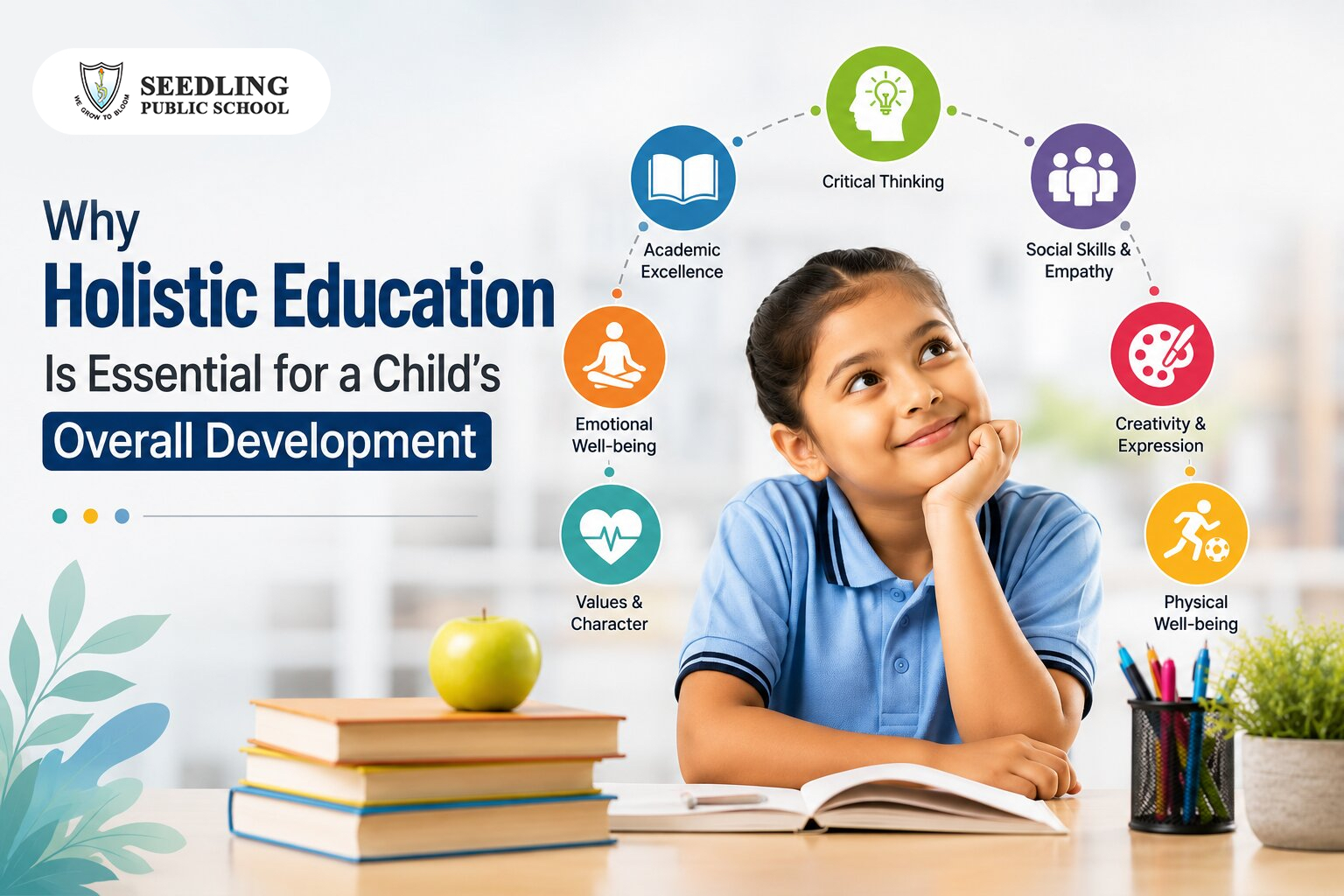
In today’s fast-changing world, good marks alone are not enough to prepare a child for the future. Parents now look for schools that also build confidence, communication skills, creativity, and emotional strength alongside academics.
This is where holistic education plays an important role. It focuses on a child’s all-round development, helping them grow not just as students, but as confident, capable individuals. For parents searching for a trusted CBSE school in Jaipur, holistic learning ensures their child is ready for both academic success and real-life challenges.
In This Article
What Is Holistic Education and Why It Matters Today?
- Holistic education focuses on the overall development of a child, not just academic marks. It nurtures intellectual, emotional, social, physical, and creative growth to help students become balanced and confident individuals.
- Instead of measuring success only through exams, it builds essential life skills such as critical thinking, communication, creativity, teamwork, and emotional awareness, preparing children for life beyond the classroom.
- This approach is aligned with global education thinking, including UNESCO’s vision for future learning, which encourages schools to develop well-rounded learners who can adapt, collaborate, and thrive in a changing world.
- It is also reflected in systems like the CBSE Holistic Progress Card (HPC), which evaluates students through a 360-degree view covering cognitive, social, emotional, and physical development.
- Together, these approaches highlight a shift in education where the focus is not just academic performance, but building complete, future-ready individuals.
Key Benefits of Holistic Education
- Stronger academic understanding: Focus on concepts, not rote learning; supports application-based learning.
- Emotional intelligence: Helps children manage stress, understand emotions, and build healthy relationships.
- Better communication skills: Encourages speaking, listening, presentations, and teamwork.
- Creativity & critical thinking: Builds curiosity and problem-solving abilities.
- Physical health & discipline: Sports and activities improve fitness, teamwork, and discipline. The World Health Organisation (WHO) also emphasizes the importance of regular physical activity for children’s overall well-being.
The Five Pillars of Holistic Development
A balanced education supports growth across multiple dimensions:
| Pillar of Holistic Development | How It Supports a Child’s Growth |
| Intellectual Development | Encourages critical thinking, curiosity, independent learning, and strong academic foundations. |
| Emotional Development | Builds self-awareness, empathy, resilience, confidence, and the ability to manage emotions effectively. |
| Social Development | Develops teamwork, communication, leadership, respect for others, and interpersonal skills through collaboration. |
| Physical Development | Promotes fitness, discipline, healthy habits, and overall well-being through sports and physical activities. |
| Creative Development | Inspires imagination, innovation, and self-expression through art, music, theatre, and hands-on learning experiences. |
Together, these five pillars help children become well-rounded, adaptable, and future-ready individuals equipped to succeed both inside and outside the classroom.
Admissions Open
Give Your Child the Best Start
Join Seedling Public School and unlock a world-class learning environment built for tomorrow's leaders.
Apply for Admission →Learning Beyond the Classroom
True learning goes beyond textbooks and classroom lessons. Activities like sports, debates, science fairs, cultural events, clubs, leadership programs, and community service give children real opportunities to learn by doing. These experiences help students apply what they study in practical situations while building confidence and responsibility.
Such experiential learning also strengthens important life skills like teamwork, critical thinking, communication, and problem-solving. For parents, this means their child is not only learning for exams but also developing skills that support lifelong growth, success, and overall personality development.
Preparing Students for the Future
Success in the future will depend on more than academic achievement alone. As the world of work and higher education continues to evolve, students need skills that enable them to think critically, collaborate effectively, adapt to change, and approach challenges with creativity and responsibility. The OECD’s Future of Education and Skills 2030 framework highlights the importance of developing these competencies to help learners thrive in an increasingly complex and interconnected world.
A holistic education supports the development of essential competencies such as:
- Critical thinking
- Creative problem-solving
- Leadership
- Collaboration
- Adaptability
- Ethical decision-making
- Lifelong learning
By nurturing these skills alongside strong academic foundations, holistic education prepares children to succeed in higher education, future careers, and everyday life.
The Role of Schools in Holistic Development
Schools play a vital role in creating environments where children feel encouraged to learn, explore, and grow.
A student-centered learning culture combines academic rigor with opportunities in sports, arts, innovation, and community engagement. Such an approach helps children build confidence while discovering their unique strengths and interests.
This philosophy is increasingly reflected in educational reforms such as CBSE’s Holistic Progress Card, which encourages schools to recognize students’ strengths across academic, social, emotional, and physical domains.
For parents in Jaipur, choosing the right school means looking beyond marks and considering how it helps children build character, creativity, leadership, and other essential life skills.
How Parents Can Support Holistic Learning at Home
Education extends beyond the classroom. Parents can reinforce holistic development by creating supportive home environments that encourage curiosity and independence.
Some simple yet meaningful practices include:
- Encouraging open conversations: Helps children express thoughts freely and build confidence in communication.
- Appreciating effort alongside achievement: Builds motivation and teaches that learning is more important than just results.
- Promoting reading and creative hobbies: Develops imagination, curiosity, and strong thinking skills.
- Supporting sports and extracurricular activities: Improves physical health, teamwork, and overall personality development.
- Teaching empathy, responsibility, and respect: Helps children become emotionally aware and socially responsible individuals.
- Allowing age-appropriate decisions: Builds independence, decision-making skills, and confidence through real-life learning.
- School and parent partnership: When both work together, children receive balanced support for overall growth and development.
Final Thoughts
A child’s education should go beyond academic achievement to nurture confidence, creativity, resilience, empathy, and a lifelong love for learning. By supporting intellectual, emotional, social, physical, and creative growth, holistic education helps students become well-rounded individuals who are prepared for success in school and beyond.
For parents exploring the best school in Jaipur or a trusted CBSE school in Jaipur, choosing the right learning environment plays a key role in shaping a child’s overall development. At schools like Seedling Public School, where learning is designed to go beyond textbooks, students get opportunities to explore academics along with sports, arts, life skills, and experiential learning. This balanced approach helps children not only perform well in exams but also grow into responsible, adaptable, and future-ready individuals prepared for life beyond the classroom.
Frequently Asked Questions (FAQs)
1. Does holistic education mean academics become less important?
No. It supports strong academics along with skills like critical thinking, creativity, and communication for overall development.
2. How can parents tell if a school genuinely follows a holistic approach?
Check if the school offers sports, arts, activities, and focuses on overall child development, not just marks.
3. Is the CBSE’s Holistic Progress Card (HPC) mandatory in every CBSE school?
It is a CBSE guideline, but not all schools may follow it in the same way.
4. At what age should holistic education begin?
It should start from early schooling to build strong lifelong learning habits.
5. Can holistic education help prepare children for careers that do not yet exist?
Yes. It builds adaptable skills like problem-solving, communication, and creativity needed for future jobs.
Ready to Enrol?
Begin Your Admission Journey
Seats are limited. Secure your child's place at Seedling Public School today.
Enquire Now →Written by
SPS Editorial Team
SPS Editorial Team creates trusted educational content for Seedling Public School (SPS). Our articles are developed with insights from experienced educators and academic professionals, ensuring every piece is accurate, practical, and relevant. We are committed to providing reliable resources that support students, parents, and lifelong learning.