School Safety Standards Every Jaipur Parent Should Check
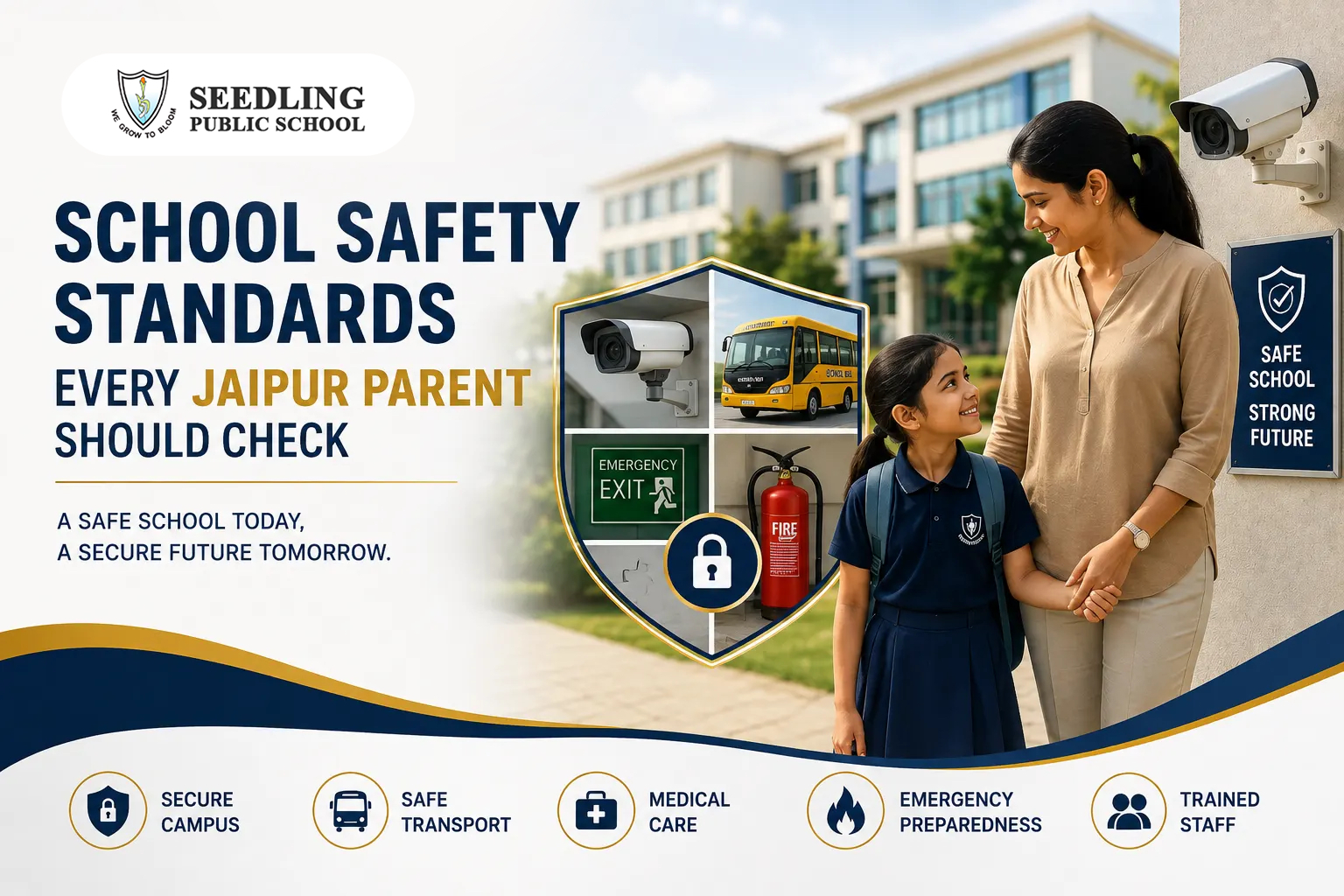
Choosing the right school goes far beyond academics, infrastructure, or extracurricular activities. For most parents, the first priority is knowing that their child will learn in a safe, secure, and supportive environment. As schools continue to evolve, safety is no longer limited to CCTV cameras or security guards. It also includes emergency preparedness, child protection policies, emotional well-being, transport safety, and healthy learning spaces.
For parents looking for the best CBSE school in Jaipur or an English medium school in Jaipur, understanding school safety standards can help them make a more informed decision. National authorities such as the Central Board of Secondary Education (CBSE), the National Commission for Protection of Child Rights (NCPCR), and the National Disaster Management Authority (NDMA) have laid down comprehensive guidelines to help schools create safe environments for children.
Before finalising a school for your child, here are the key safety standards every Jaipur parent should evaluate.
In This Article
1. Building & Fire Safety
A school’s infrastructure should meet prescribed safety standards and be supported by valid building stability and fire safety certifications issued by the competent authorities. Schools should also have clearly marked emergency exits, unobstructed evacuation routes, functional fire extinguishers, and well-defined evacuation plans, along with regular fire safety inspections.
Admissions Open
Give Your Child the Best Start
Join Seedling Public School and unlock a world-class learning environment built for tomorrow's leaders.
Apply for Admission →Parents can ask whether the school conducts periodic fire drills, whether fire exits are kept clear and easily accessible at all times, and whether both staff and students are trained to respond effectively during emergencies. These measures are part of CBSE’s school safety requirements.
This version flows naturally, adds a practical checkpoint for parents, and reinforces the importance of maintaining accessible fire exits without making the section feel overloaded.
2. Campus Security Measures
An effective school security system combines infrastructure with responsible supervision.
Look for features such as:
- Controlled visitor entry
- Visitor identification procedures
- CCTV surveillance in appropriate areas
- Trained security personnel
- Secure boundary walls and monitored entry points
Parents should also understand the school’s visitor management system and student pick-up and dispersal procedures.
3. Child Protection and Safety Policies
Physical safety is only one aspect of a secure learning environment. Schools should also have clear child protection policies to prevent bullying, harassment, abuse, and discrimination.
Look for schools that have the following measures in place:
- Child protection and safeguarding policies
- Anti-bullying initiatives
- Grievance redressal mechanisms
- Trained counsellors or designated child protection personnel
- Awareness programmes for students and staff
A school that prioritises children’s emotional safety helps create an environment where students feel respected, confident, and supported.
4. Safe School Transport
If your child uses school transport, safety should extend beyond the campus.
Parents should check whether:
- School buses undergo regular maintenance.
- Drivers and attendants are properly verified and trained.
- Vehicles comply with safety regulations.
- Students are supervised during boarding and drop-off.
Reliable transport systems help ensure students travel safely between home and school while giving parents greater peace of mind.
5. Health, Hygiene, and Medical Preparedness
A healthy learning environment supports both safety and learning outcomes.
Important aspects include:
- Clean classrooms and washrooms
- Safe drinking water
- Well-maintained sanitation facilities
- First-aid facilities
- Access to trained medical staff or emergency medical support
- Proper illness management protocols
CBSE requires affiliated schools to comply with health, hygiene, and water safety norms as part of their affiliation requirements.
6. Emergency Preparedness and Disaster Management
Schools should be prepared for situations such as fires, earthquakes, medical emergencies, or other unexpected incidents.
Ask whether the school conducts:
- Regular evacuation drills
- Disaster management training
- Emergency response planning
- Staff training in first aid
- Safety awareness programmes for students
Preparedness ensures that students and staff know how to respond calmly during emergencies. NDMA’s School Safety Policy highlights the importance of regular drills and preparedness planning.
7. Emotional Well-being and Student Support
A safe school also supports children’s mental and emotional health.
Schools that promote emotional well-being often provide:
- School counsellors
- Social and emotional learning programmes
- Positive classroom culture
- Teacher training to identify behavioural concerns
- Parent-school communication channels
Children learn more effectively when they feel emotionally secure and supported. Recent child safety guidelines also emphasise emotional safety alongside physical security.
Questions Parents Can Ask During a School Visit
Visiting a school gives parents an opportunity to understand how safety measures are implemented in day-to-day operations. Along with observing the campus, consider asking a few practical questions to evaluate the school’s commitment to student safety.
- Does the school conduct regular fire and evacuation drills?
- Are trained counsellors or a student wellness team available on campus?
- What safety measures are followed for school transport?
- How does the school monitor visitors and manage campus entry?
- What child protection and anti-bullying policies are in place?
Asking these questions can provide valuable insights into the school’s safety culture and help you make a more informed admission decision.
School safety is not determined by a single feature but by a combination of policies, infrastructure, preparedness, and a culture that places children’s well-being at the centre of every decision. Taking the time to ask the right questions during school visits can help parents make a confident and informed choice.
Conclusion
When evaluating a CBSE school in Jaipur, parents should look beyond academic performance and campus facilities. A truly safe school combines strong infrastructure, effective child protection policies, emergency preparedness, health and hygiene standards, secure transport, and emotional support systems to create an environment where children can learn with confidence.
If you are searching for the best CBSE school in Jaipur, choose a school that demonstrates a genuine commitment to student safety through transparent policies, trained staff, and continuous improvement. At Seedling Public School, student safety is supported through a secure campus, caring educators, and a learning environment designed to help children grow academically, socially, and emotionally.
FAQs
1. Are schools required to conduct safety audits?
Yes. Schools are expected to comply with safety requirements prescribed by education authorities and local regulatory bodies, including periodic inspections and certifications where applicable.
2. Can parents request information about a school’s safety policies before admission?
Yes. Parents can ask about fire safety measures, child protection policies, transport protocols, emergency preparedness, and grievance mechanisms during the admission process.
3. Do CBSE schools need to have a School Safety Committee?
CBSE requires affiliated schools to implement safety measures and constitute committees as per its affiliation and safety guidelines to promote a safe learning environment.
4. Is CCTV surveillance alone enough to ensure school safety?
No. CCTV is only one aspect of school safety. Effective safety also includes trained staff, child protection policies, emergency planning, transport safety, and student well-being.
5. What should parents do if they notice a safety concern after admission?
Parents should report the concern through the school’s designated grievance or complaint mechanism so that it can be addressed promptly and appropriately.
Ready to Enrol?
Begin Your Admission Journey
Seats are limited. Secure your child's place at Seedling Public School today.
Enquire Now →Written by
SPS Editorial Team
SPS Editorial Team creates trusted educational content for Seedling Public School (SPS). Our articles are developed with insights from experienced educators and academic professionals, ensuring every piece is accurate, practical, and relevant. We are committed to providing reliable resources that support students, parents, and lifelong learning.