
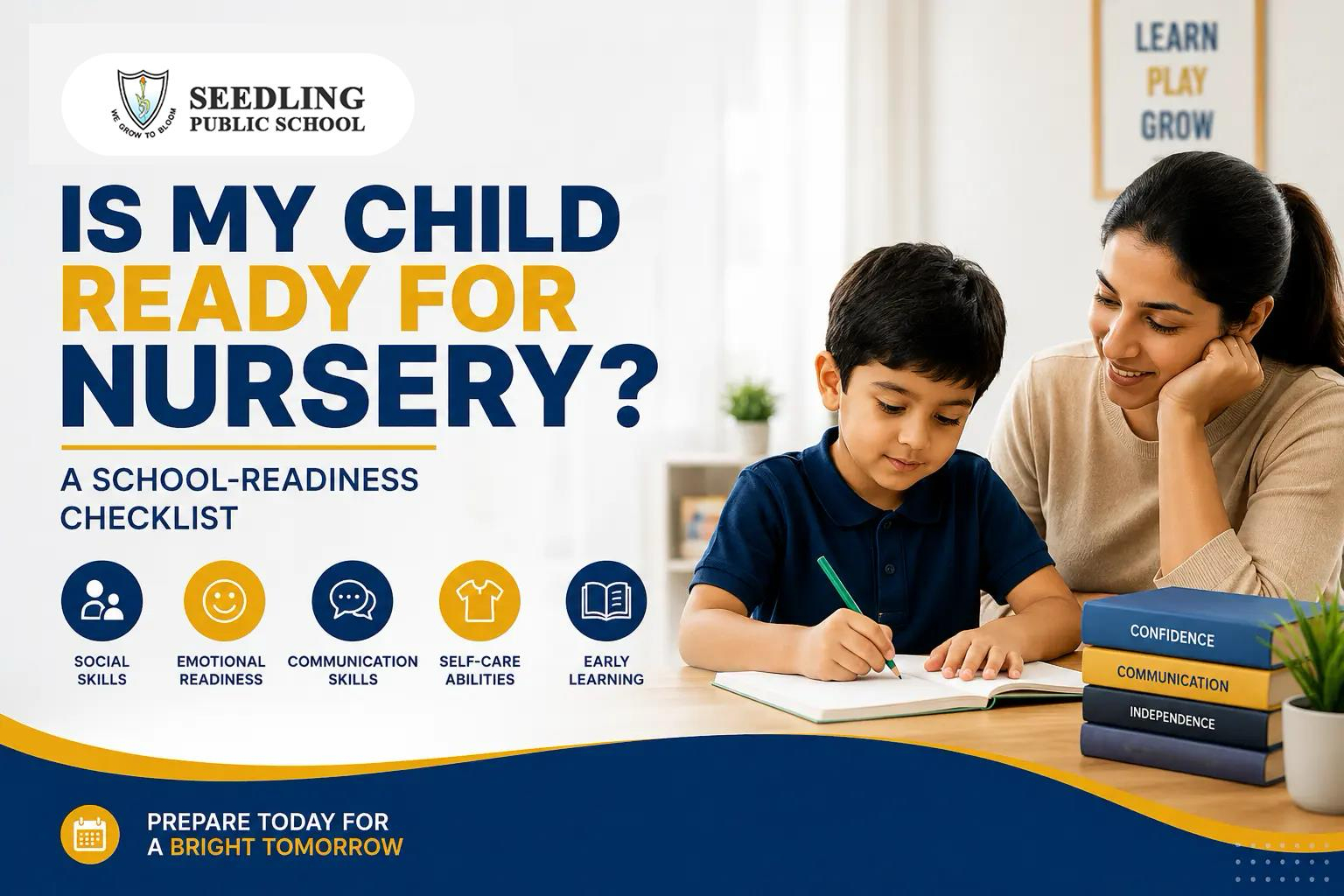
Is My Child Ready for Nursery? A School-Readiness Checklist
For many parents, the first day of nursery brings a mix of excitement and uncertainty. One of the most common questions is, “Is my child really ready for nursery?” While it’s natural to wonder whether your child knows enough before starting school, school readiness is about much more than early academics. It is about helping children develop the confidence, independence, communication, and social skills they need to enjoy learning from day one.
According to the National Education Policy (NEP) 2020, early childhood education should focus on holistic development through play, exploration, and activity-based learning rather than academic pressure. This approach helps children build a strong foundation for lifelong learning.
In This Article
What Does School Readiness Mean?
School readiness refers to a child’s ability to participate confidently in classroom activities, interact with teachers and peers, and adapt to a structured routine. Every child develops at a different pace, so readiness is measured by overall development rather than age alone. Rather than focusing only on early academic skills, it is about whether a child is emotionally, socially, physically, and mentally prepared to begin their learning journey.
A school-ready child can usually express basic needs, follow simple instructions, manage short periods away from parents, and participate in age-appropriate activities with growing confidence. Physical readiness includes basic motor skills such as holding a crayon, turning pages, or managing simple self-care tasks.
Admissions Open
Give Your Child the Best Start
Join Seedling Public School and unlock a world-class learning environment built for tomorrow's leaders.
Apply for Admission →Emotional readiness involves recognising and expressing feelings appropriately, while language readiness helps children communicate with teachers and classmates. Developing independence through simple daily routines, such as eating independently or putting away toys, also helps children adjust more comfortably to a nursery environment.
UNICEF Early Childhood Development also highlights that young children thrive when they receive nurturing care, opportunities to play, and supportive learning experiences before starting school. These experiences build a strong foundation for learning, confidence, and overall well-being, making the transition to nursery smoother and more enjoyable.
Academic Readiness vs School Readiness
Many parents believe children need to master academic skills before starting nursery. In reality, early childhood education focuses more on a child’s ability to communicate, interact, and adapt to a new environment than on academic achievements.
| Academic Readiness | School Readiness |
| Recognises letters and numbers | Communicates basic needs confidently |
| Can recite the alphabet | Listens to and follows simple instructions |
| Counts numbers | Interacts and plays with other children |
| Writes their name | Manages simple self-help tasks independently |
| Identifies colours and shapes | Adapts to routines and short periods away from parents |
While recognising letters, numbers, or colours is beneficial, these skills are not the primary indicators of nursery readiness. Children who are curious, emotionally secure, able to communicate, and willing to explore new experiences often adjust more comfortably to a nursery environment and develop academic skills naturally through play-based learning.
A Simple School-Readiness Checklist
Every child develops at their own pace, so this checklist should be used as a guide rather than a pass-or-fail test. If your child is still developing some of these skills, remember that nursery is designed to nurture them.
| Area | Signs Your Child May Be Ready |
| Communication | Expresses basic needs and understands simple instructions. |
| Social Skills | Plays with other children and shares with encouragement. |
| Emotional Readiness | Can stay away from parents for short periods without significant distress. |
| Self-Help Skills | Washes hands, eats independently, and manages simple personal tasks. |
| Attention Span | Listens to stories or participates in activities for a few minutes. |
| Motor Skills | Holds crayons, turns pages, stacks blocks, and enjoys drawing. |
| Curiosity | Asks questions, explores surroundings, and enjoys discovering new things. |
If your child is still developing some of these skills, there is no need to worry. Nursery is designed to help children grow in these areas.
Understanding these indicators is only the first step. Equally important is recognising the behaviours that show your child is becoming comfortable with a structured learning environment.
Signs Your Child Is Ready for Nursery
Every child is unique, but certain behaviours often indicate readiness for school.
- Shows curiosity about new places and people.
- Follows simple daily routines.
- Enjoys listening to stories and participating in activities.
- Tries simple tasks independently.
- Expresses emotions using words instead of only crying.
- Shows interest in playing and learning with other children.
These behaviours suggest that your child is developing the confidence needed to begin their school journey.
The good news is that school readiness can be nurtured through simple everyday experiences at home.
How Parents Can Prepare Their Child
Preparing for nursery starts long before the first day of school. Simple daily routines at home can help children become more confident, independent, and comfortable in a structured learning environment.
Parents can support school readiness by:
- Establishing a consistent routine: Regular sleep, meal, and morning schedules help children adjust more easily to the daily routine of nursery.
- Encouraging independence: Let children practise simple tasks such as eating on their own, putting away toys, washing their hands, or wearing their shoes. These everyday activities build confidence and self-reliance.
- Reading together every day: Storytime strengthens vocabulary, listening skills, imagination, and a love for books while encouraging meaningful parent-child interaction.
- Giving simple choices: Allow children to choose between two outfits, snacks, or activities. Making small decisions helps develop confidence and decision-making skills.
- Creating opportunities to socialise: Playdates, family gatherings, or group activities help children learn to share, cooperate, communicate, and interact with others.
- Talking positively about school: Speak enthusiastically about teachers, classrooms, and new friends to help children look forward to starting nursery with excitement rather than anxiety.
These small but meaningful experiences gradually prepare children for a successful transition to nursery by helping them develop independence, communication skills, emotional confidence, and a positive attitude towards learning.
The Centers for Disease Control and Prevention (CDC) recommends encouraging communication, play, and age-appropriate independence to support healthy child development.
Remember, Every Child Learns Differently
It is important not to compare your child with others. Some children adapt to school quickly, while others need a little more time. What matters most is providing encouragement, patience, and opportunities to learn through everyday experiences.
A supportive school environment also plays a significant role in helping children feel secure, confident, and excited about learning.
Ultimately, preparing a child for nursery is less about academic achievement and more about building confidence and independence.
Conclusion
School readiness is not about achieving academic milestones before nursery. It involves helping children develop confidence, independence, communication skills, and a love for learning. When parents focus on these essential life skills, children are better prepared to embrace new experiences and build meaningful relationships in school.
At Seedling Public School, we believe every child deserves a nurturing environment where curiosity, creativity, and holistic development are encouraged from the very beginning. Through play-based learning, caring educators, and age-appropriate experiences, we help young learners build the confidence and school readiness they need to begin their educational journey with enthusiasm.
This approach reflects the vision of UNESCO’s Early Childhood Care and Education initiatives, which emphasise creating supportive learning environments that help every child reach their full potential.
When children are given the opportunity to explore, play, and learn at their pace, they begin their educational journey with confidence, curiosity, and a lifelong love for learning.
FAQs
1. Can a child be ready for nursery even if they are shy?
Yes. Many children are naturally shy. With a supportive environment and regular interaction, they gradually become more confident.
2. Does my child need to be toilet trained before starting nursery?
Requirements vary by school, but many nurseries support children who are still developing toilet independence.
3. How long does it usually take a child to settle into nursery?
Every child is different, but most adjust within a few weeks with consistent routines and encouragement.
4. What should I avoid doing before my child’s first day of nursery?
Avoid creating fear about school or comparing your child with others. Instead, talk positively about the new experience.
5. How can I make the transition to nursery easier for my child?
Maintain a consistent routine, encourage independence, and reassure your child with positive conversations about school.
Official Sources:
Ready to Enrol?
Begin Your Admission Journey
Seats are limited. Secure your child's place at Seedling Public School today.
Enquire Now →Written by
SPS Editorial Team
SPS Editorial Team creates trusted educational content for Seedling Public School (SPS). Our articles are developed with insights from experienced educators and academic professionals, ensuring every piece is accurate, practical, and relevant. We are committed to providing reliable resources that support students, parents, and lifelong learning.