
When Helping Too Much Stops Children From Growing
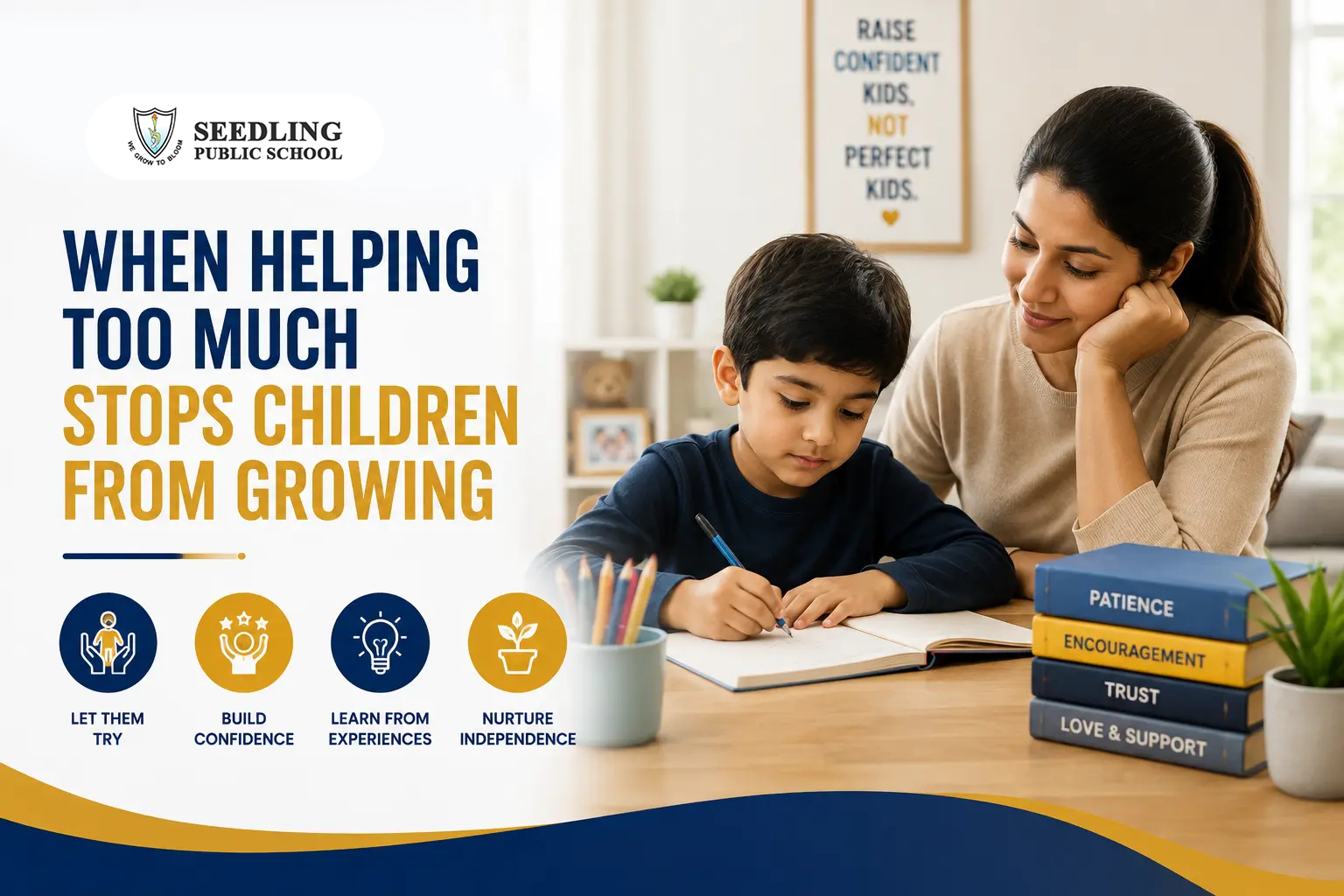
As parents and educators, protecting children from difficulties comes naturally. Whether it involves completing school projects, solving peer conflicts, or stepping in at the first sign of struggle, these impulses typically originate from genuine care.
However, research on parenting styles and child development reveals an important paradox. Constantly intervening in children’s challenges can unintentionally limit their ability to develop independence, self-efficacy, and critical problem-solving skills. Educational psychology increasingly recognizes that the primary goal of parenting is not eliminating every obstacle but equipping children with the skills to overcome them independently.
Understanding the balance between providing support and fostering autonomy is essential for raising confident, resilient learners prepared for real-world challenges.
In This Article
Why Independent Children Grow Into More Confident Adults
The Research Behind Independent Learning
Children build confidence, competence, and resilience by actively engaging with challenges rather than having every obstacle removed for them. According to Self-Determination Theory, developed by psychologists Edward Deci and Richard Ryan, autonomy is one of the three fundamental psychological needs that supports healthy motivation, learning, and well-being. When children are given opportunities to make decisions, solve problems, and learn from their experiences, they develop greater intrinsic motivation and self-efficacy.
Every time children make a decision, attempt a new task, or work through a challenge independently, they strengthen the cognitive and emotional skills needed for resilience and responsible decision-making. Even mistakes become valuable learning experiences that help them adapt, improve, and approach future challenges with greater confidence.
Supported by Educational Policy and Global Research
India’s National Education Policy (NEP) 2020 promotes experiential, inquiry-based, and competency-focused learning, recognising that students learn most effectively when they actively participate in the learning process rather than simply receiving information. This approach encourages critical thinking, problem-solving, and independent learning.
Admissions Open
Give Your Child the Best Start
Join Seedling Public School and unlock a world-class learning environment built for tomorrow's leaders.
Apply for Admission →Global child development research supports the same principle. UNICEF describes positive parenting as creating a supportive environment where children are encouraged to explore, make meaningful choices, and gradually develop independence while knowing trusted adults are available to guide them.
Similarly, research from the Centers for Disease Control and Prevention (CDC) highlights that supportive relationships combined with opportunities to build independence contributes significantly to children’s emotional and social development.
Psychological research also shows that children whose parents provide guidance while respecting autonomy tend to demonstrate:
- Higher academic motivation and achievement
- Better emotional regulation and resilience
- Stronger social skills and peer relationships
- Greater self-esteem based on genuine competence rather than external validation
When Support Becomes Overprotection: Recognizing the Threshold
Occasional parental intervention is necessary, but consistently stepping in before children have a chance to think or attempt solutions can prevent them from developing responsibility, perseverance, and healthy self-reliance.
For example, if a child forgets a lunch box once or struggles to organise their school bag, parents may feel tempted to step in immediately. While occasional help is appropriate, allowing children to correct small mistakes themselves helps them develop responsibility and organisational skills. This pattern, often termed “helicopter parenting,” has emerged as a significant concern in child development literature.
Common Patterns That Limit Growth:
1. Completing homework or school projects for children.
2. Immediately solving disagreements with peers rather than coaching conflict resolution.
3. Making every significant decision on the child’s behalf.
4. Preventing children from experiencing age-appropriate challenges and natural consequences.
5. Over-managing academic or social schedules without student input.
Research indicates that children whose parents consistently intervene show lower rates of independent problem-solving and higher anxiety when facing unfamiliar situations.
Distinguishing Healthy Support From Overhelping
Understanding the difference between appropriate guidance and overprotection is crucial for parents and educators
| Indicator | Healthy Support | Overhelping |
| Response to Struggle | Encourages the child to try independently first, then offers guidance if needed. | Steps in immediately and completes the task before the child attempts it. |
| Decision-Making | Helps children think through options by asking reflective questions and discussing consequences. | Makes every decision on the child’s behalf, leaving little room for independent thinking. |
| Handling Mistakes | Treats mistakes as valuable learning opportunities and encourages problem-solving. | Prevents failures at all costs and quickly rescues the child from every setback. |
| Praise & Feedback | Appreciates effort, persistence, improvement, and the learning process. | Focuses mainly on perfect results, achievements, or flawless performance. |
| Responsibility | Gradually give children age-appropriate responsibilities to build confidence and independence. | Takes over everyday responsibilities to avoid inconvenience or ensure perfect outcomes. |
The Critical Difference
| Healthy Support | Overhelping |
| Coach’s Mindset: “How can I help my child solve this independently?” | Rescuer’s Mindset: “How quickly can I fix this for my child?” |
How to Support Your Child Without Overhelping
Children need support, but they also need opportunities to discover what they are capable of achieving on their own.
The Critical Question Parents Should Ask Themselves
For instance, if your child says, “I can’t do this math problem,” avoid giving the answer straight away. Instead, ask, “Which part do you understand?” or “Can you show me what you’ve tried so far?” This keeps you involved while encouraging independent thinking.
This simple reframing shifts perspective from rescue to coaching, from protection to preparation. It acknowledges that the goal is not comfort today, but capability tomorrow.
Age-Appropriate Independence Building
Children develop independence gradually, not all at once. Providing age-appropriate opportunities to make decisions, solve problems, and take responsibility helps them build confidence and essential life skills at every stage of their development.
| Age Group | Age | Age-Appropriate Independence Skills | Parent’s Role |
| Early Primary | 5–7 years | • Making simple choices (such as selecting snacks or activities)• Attempting basic self-care tasks like dressing and personal hygiene• Sorting and organising personal belongings• Trying to solve minor problems before asking for help | • Offer two or three choices instead of deciding for them.• Encourage them to complete simple tasks independently before stepping in.• Praise effort rather than perfection. |
| Middle Primary | 8–10 years | • Managing homework routines using a checklist• Handling peer conflicts with adult guidance when needed• Taking responsibility for age-appropriate household chores• Choosing extracurricular activities based on interests• Learning basic time management skills | • Guide instead of giving answers.• Encourage children to think through solutions.• Allow them to experience the natural outcomes of small decisions. |
| Upper Primary & Early Secondary | 11–14 years | • Managing study schedules independently• Handling academic challenges with teacher support rather than parental intervention• Resolving peer conflicts with minimal adult involvement• Participating in family discussions and decisions• Taking ownership of long-term school projects | • Shift from directing to coaching.• Encourage independent planning and reflection.• Avoid taking over projects or resolving every challenge on their behalf. |
| Adolescence | 15–18 years | • Making informed academic and career exploration decisions• Managing time and workload with minimal supervision• Attempting to solve problems independently before seeking advice• Learning from the natural consequences of decisions• Taking responsibility for personal learning and long-term goals | • Act as a mentor rather than a problem-solver.• Discuss options without making decisions for them.• Support independence while remaining available for guidance when needed. |
Every child develops independence at their own pace, but consistent opportunities to make decisions, solve problems, and take responsibility help build confidence over time. As children grow, the parent’s role naturally shifts from doing things for them to guiding them towards becoming capable, self-reliant individuals.
Evidence-Based Strategies for Encouraging Independence
Building independence doesn’t require dramatic changes. Small, consistent opportunities in everyday life help children develop confidence, resilience, and decision-making skills over time. Here are practical, research-backed strategies parents and educators can adopt:
1. Ask Thinking Questions Instead of Giving Immediate Answers
When your child faces a challenge, resist solving it immediately. Instead, ask questions such as:
- What have you already tried?
- What do you think might work?
- Is there another way you could approach this?
These conversations encourage critical thinking, problem-solving, and confidence in making decisions independently.
2. Give Age-Appropriate Responsibilities
Assigning regular responsibilities at home helps children develop accountability, organisation, and self-confidence. Whether it’s packing their school bag, helping with household chores, or managing a homework checklist, these everyday tasks teach valuable life skills.
3. Offer Choices Within Clear Boundaries
Children develop independence when they are allowed to make meaningful decisions. Instead of making every choice for them, offer limited options, such as selecting an extracurricular activity, planning a weekend study schedule, or deciding the order in which they complete homework. This builds ownership while maintaining appropriate guidance.
Example:
Instead of deciding every activity for your child, ask, “Would you like to finish your homework before football practice or afterwards?” Giving limited choices helps children develop decision-making skills while still providing structure.
4. Let Mistakes Become Learning Opportunities
Children do not need to succeed every time to grow. If they forget an assignment or make a poor decision, avoid rescuing them immediately. Encourage reflection by asking, “What did you learn from this?” Learning from natural consequences helps build resilience and responsibility.
5. Praise Effort, Strategies, and Progress
Research by psychologist Carol Dweck highlights that recognising effort and persistence encourages a growth mindset. Instead of saying, “You’re so smart,” try, “I noticed how patiently you worked through that problem.” Process-focused praise helps children understand that abilities improve through practice and perseverance.
6. Create Opportunities for Independent Problem-Solving
Whenever possible, allow children to handle age-appropriate challenges before stepping in. Whether it’s resolving a small disagreement with a friend or organising materials for a school project, these experiences strengthen self-efficacy and prepare them for future responsibilities.
Children become more independent not through one major lesson but through hundreds of small opportunities to think, decide, try, make mistakes, and try again. Supported by guidance rather than constant intervention, these everyday experiences help them grow into confident and capable learners.
Implementation: Moving Forward
For Parents:
- Identify one area where you tend to over-help. Start shifting to a coaching role in that area only.
- Communicate changes clearly: “I’m going to let you handle your homework planning. I’m here if you get stuck.”
- Be patient with the process. Independence building takes time, and children will initially resist increased responsibility.
For Educators:
- Create regular opportunities for student choice in learning tasks.
- Teach explicit problem-solving and conflict resolution skills.
- Reduce excessive scaffolding that removes opportunities for independent thinking.
- Communicate with parents about why certain struggles are valuable learning experiences.
For School Partnerships:
- Schools should help parents understand why homework should be student-led.
- Regular communication about a child’s actual capability versus presumed need for help.
- Clear guidelines on what constitutes appropriate parental involvement at each grade level.
Conclusion
Child development is not about protecting children from every challenge but about helping them build confidence, independence, and problem-solving skills through everyday experiences. When parents and educators guide instead of rescue, children become more resilient, responsible, and better prepared for both school and life.
At Seedling Public School, we foster a learning environment that encourages independent thinking, curiosity, and responsibility, helping students grow into confident, compassionate, and future-ready learners. Together, parents and educators can empower children with the skills they need to navigate challenges and thrive in an ever-changing world.
FAQs
1. How can parents tell if a child genuinely needs help or just reassurance?
If the child understands the task but lacks confidence, encouragement is often more helpful than taking over.
2. Does giving children responsibilities improve academic performance?
Yes. Age-appropriate responsibilities can strengthen organisation, time management, and self-discipline, which also support learning.
3. Can too much praise reduce a child’s motivation?
Research suggests that praising effort, strategies, and persistence is more effective than praising only intelligence or perfect results.
4. Why do some children avoid trying new things on their own?
Fear of making mistakes, lack of confidence, or becoming accustomed to adults solving problems can make children hesitant to act independently.
5. What is one simple daily habit that builds independence?
Ask your child, “What do you think you should do next?” before offering a solution. This encourages independent thinking and decision-making.
6. Is it okay to let children struggle sometimes?
Yes. Safe, age-appropriate struggles help children develop resilience, confidence, and independent problem-solving skills.
Ready to Enrol?
Begin Your Admission Journey
Seats are limited. Secure your child's place at Seedling Public School today.
Enquire Now →Written by
SPS Editorial Team
SPS Editorial Team creates trusted educational content for Seedling Public School (SPS). Our articles are developed with insights from experienced educators and academic professionals, ensuring every piece is accurate, practical, and relevant. We are committed to providing reliable resources that support students, parents, and lifelong learning.