Are Parents Accidentally Comparing More Than They Encourage?
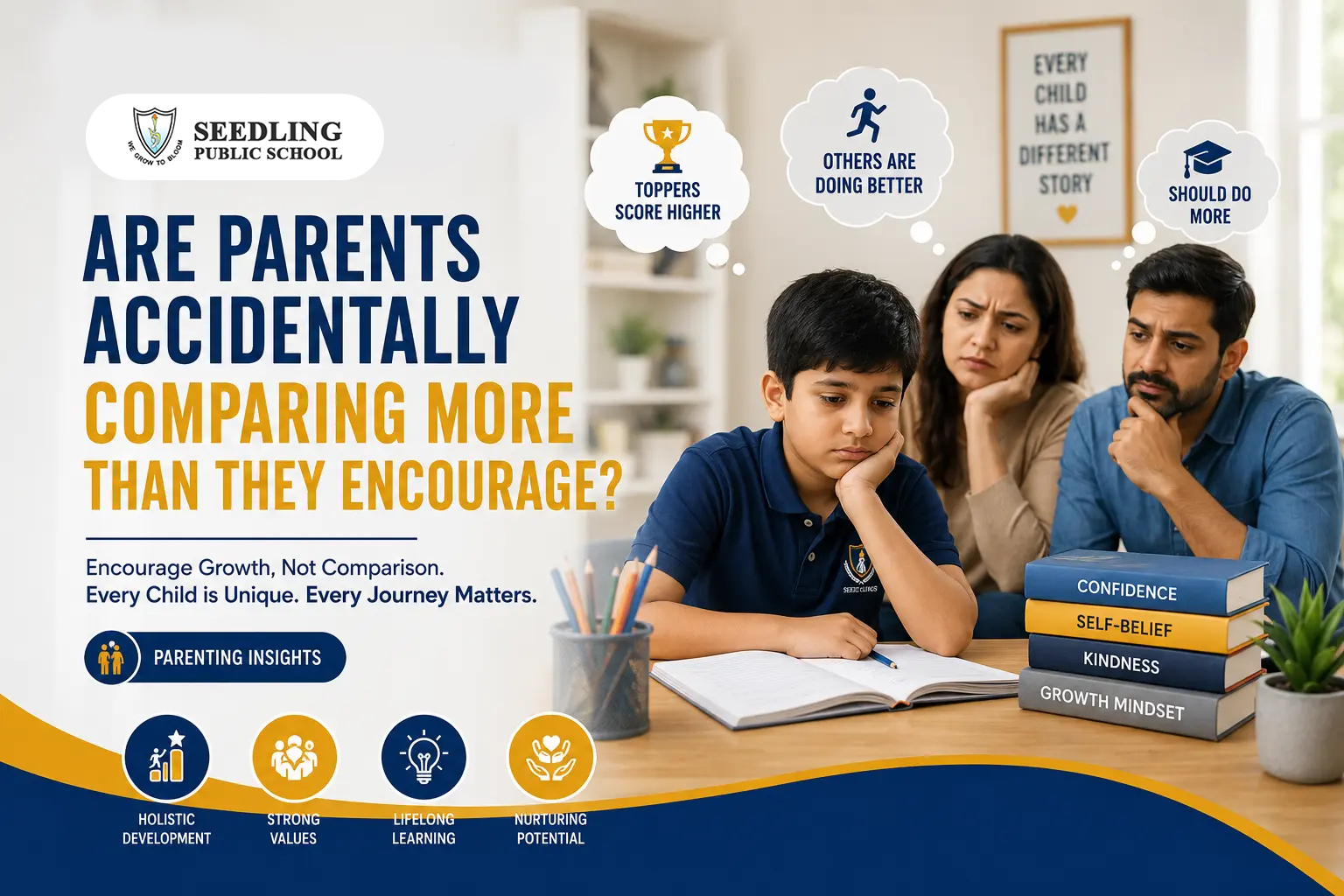
Every parent wants to help their child succeed. Yet, in the effort to motivate them, comparisons with siblings, classmates, or friends can quietly replace encouragement without parents even realising it. Phrases like “Look how well your cousin did” or “Your friend finishes homework much faster” are often intended as motivation. However, repeated comparisons can have the opposite effect by affecting a child’s confidence, motivation, and willingness to learn.
Developing self-confidence, positive parenting, and a growth mindset is becoming increasingly important in today’s education system. Research and educational frameworks now emphasise encouraging individual progress rather than measuring children against others. This raises an important question: Are parents encouraging growth or unintentionally creating pressure through constant comparison?
According to UNICEF’s Parenting Resources, children thrive when they receive encouragement, emotional support, and opportunities to develop at their own pace. This reinforces the importance of recognising every child’s unique strengths and learning journey.
In This Article
Why Comparisons Can Affect Children
Every child is unique, with their own strengths, interests, and pace of learning. While some may excel academically, others may demonstrate their abilities in creativity, communication, leadership, sports, or problem-solving. Frequent comparisons can affect a child’s confidence and learning journey in several ways:
Admissions Open
Give Your Child the Best Start
Join Seedling Public School and unlock a world-class learning environment built for tomorrow's leaders.
Apply for Admission →- Shifts the focus from personal growth: Children may begin measuring their success against others instead of celebrating their own progress.
- Reduces self-confidence: Constant comparisons can make children doubt their abilities and feel less confident about trying new things.
- Creates fear of failure: Children may avoid challenges if they worry about not meeting expectations or being compared with others.
- Limits independent thinking: Seeking approval from others can discourage children from exploring their own interests and ideas.
- Overlooks individual strengths: Every child develops differently, and comparisons often ignore their unique talents and potential.
Recognising the importance of individual growth, the National Education Policy (NEP) 2020 promotes holistic and competency-based education that values critical thinking, creativity, and diverse talents rather than focusing solely on academic performance. This reflects a broader shift towards nurturing every child’s potential and supporting their overall development.
Understanding these differences reminds us that meaningful encouragement inspires confidence and continuous learning, while constant comparison can create unnecessary pressure and limit a child’s willingness to explore, learn, and grow.
Comparison vs Encouragement: What’s the Difference?
The difference between comparison and encouragement becomes clearer when we look at how each approach influences a child’s learning, confidence, and overall development.
| Comparison | Encouragement |
| Focuses on others’ achievements | Focuses on a child’s personal progress |
| May create pressure or self-doubt | Builds confidence and motivation |
| Encourages competition with peers | Encourages self-improvement |
| Highlights weaknesses | Recognises strengths and effort |
| Seeks better performance through comparison | Promotes lifelong learning and resilience |
While comparison often measures children against others, encouragement focuses on helping them become the best version of themselves. This positive approach lays the foundation for greater confidence, resilience, and a lifelong love for learning.
What Encouragement Looks Like
Encouragement is not about lowering expectations or praising every outcome. It is about recognising effort, supporting progress, and helping children believe that their abilities can grow with learning and practice. When children feel supported rather than judged, they are more likely to take initiative, learn from mistakes, and approach challenges with confidence.
Parents can encourage their children by:
- Appreciating effort as well as outcomes: Acknowledge the hard work, persistence, and dedication behind every achievement, not just the final result.
- Setting realistic and achievable goals: Break larger goals into smaller milestones that motivate children to keep improving.
- Celebrating progress: Recognise small improvements to reinforce confidence and encourage continuous learning.
- Viewing mistakes as learning opportunities: Help children understand that setbacks are a natural part of growth and problem-solving.
- Listening without judgment: Give children the space to express their thoughts, concerns, and experiences without fear of criticism.
These everyday practices help children develop resilience, self-confidence, a positive attitude towards learning, and the willingness to embrace new challenges. Over time, they become more motivated by personal growth than by external comparisons.
While encouragement begins at home, schools play an equally important role by creating learning environments where every child feels valued, supported, and inspired to reach their full potential.
How Schools Help Build Confidence
Schools play a significant role in shaping how children perceive themselves as learners. A supportive learning environment encourages students to participate, explore new ideas, ask questions, and learn from their experiences rather than focusing solely on academic scores. When children feel valued for their effort and progress, they are more likely to develop confidence, resilience, and a positive attitude towards learning.
Many schools nurture these qualities by incorporating:
- Inquiry-based learning: Encourages students to ask questions, investigate ideas, and develop independent thinking.
- Project-based activities: Helps students apply classroom learning to real-world situations while strengthening collaboration and problem-solving skills.
- Collaborative classroom discussions: Promotes teamwork, communication, and respect for diverse perspectives.
- Creative opportunities through arts and sports: Enables children to discover their talents, express themselves, and build self-esteem beyond academics.
- Constructive feedback: Focuses on guiding improvement and recognising progress rather than comparing students with one another.
These experiences help children understand that learning is a continuous journey where effort, curiosity, and personal growth matter just as much as achievement. When schools and parents work together to reinforce these values, children are better equipped to become confident, motivated, and lifelong learners.
Even small changes in everyday conversations can make children feel supported instead of judged.
Simple Ways Parents Can Encourage Instead of Compare
The words parents use every day have a lasting impact on how children see themselves and their abilities. A small change in language can shift the focus from comparison to encouragement, helping children feel supported, valued, and motivated to improve.
| Instead of Saying | Try Saying |
| “Your friend scored higher than you.” | “Let’s see how you can improve from your last performance.” |
| “Why can’t you be like your sibling?” | “Everyone learns differently. Let’s find the approach that works best for you.” |
| “You always make mistakes.” | “Mistakes help us learn. Let’s figure out what we can do differently next time.” |
| “You should be the best.” | “Do your best and keep improving every day.” |
| “That’s not good enough.” | “You’ve made progress. Let’s work together on the next step.” |
These simple changes encourage children to focus on personal growth instead of comparing themselves with others. Over time, they develop greater confidence, resilience, and a willingness to embrace challenges, knowing that progress matters more than perfection.
Conclusion
Every child has a unique learning journey, shaped by their strengths, interests, and pace of development. While comparisons may be well-intentioned, genuine encouragement helps children build confidence, resilience, and a lifelong love for learning. By promoting positive parenting, nurturing a growth mindset, and celebrating individual progress, families can help children become self-motivated and emotionally secure learners.
The answer lies not in expecting children to outperform others, but in helping them become better versions of themselves every day.
At Seedling Public School, we believe that every child deserves an environment where effort is recognised, individuality is respected, and learning extends beyond academic scores. Through a balanced approach that values confidence, creativity, collaboration, and holistic development, we strive to help every student reach their full potential.
This approach reflects the vision of UNESCO and NEP 2020, both of which advocate for education that supports the all-round development of every learner and prepares children for meaningful participation in society.
FAQs
1. Can comparing children affect their self-esteem?
Yes. Frequent comparisons can reduce self-confidence and make children doubt their abilities.
2. Does every child learn at the same pace?
No. Every child develops skills and confidence differently.
3. What is a growth mindset?
It is the belief that abilities improve through effort, practice, and learning.
4. Can comparing children ever have a positive impact?
Occasional comparisons may seem motivating, but repeated comparisons are more likely to create pressure than lasting confidence.
5. What are some signs that a child feels pressured by comparisons?
Children may become less confident, avoid challenges, lose interest in learning, or frequently compare themselves with others.
Ready to Enrol?
Begin Your Admission Journey
Seats are limited. Secure your child's place at Seedling Public School today.
Enquire Now →Written by
SPS Editorial Team
SPS Editorial Team creates trusted educational content for Seedling Public School (SPS). Our articles are developed with insights from experienced educators and academic professionals, ensuring every piece is accurate, practical, and relevant. We are committed to providing reliable resources that support students, parents, and lifelong learning.