
Artificial Intelligence in Schools: Preparing Students for an AI-Driven Future
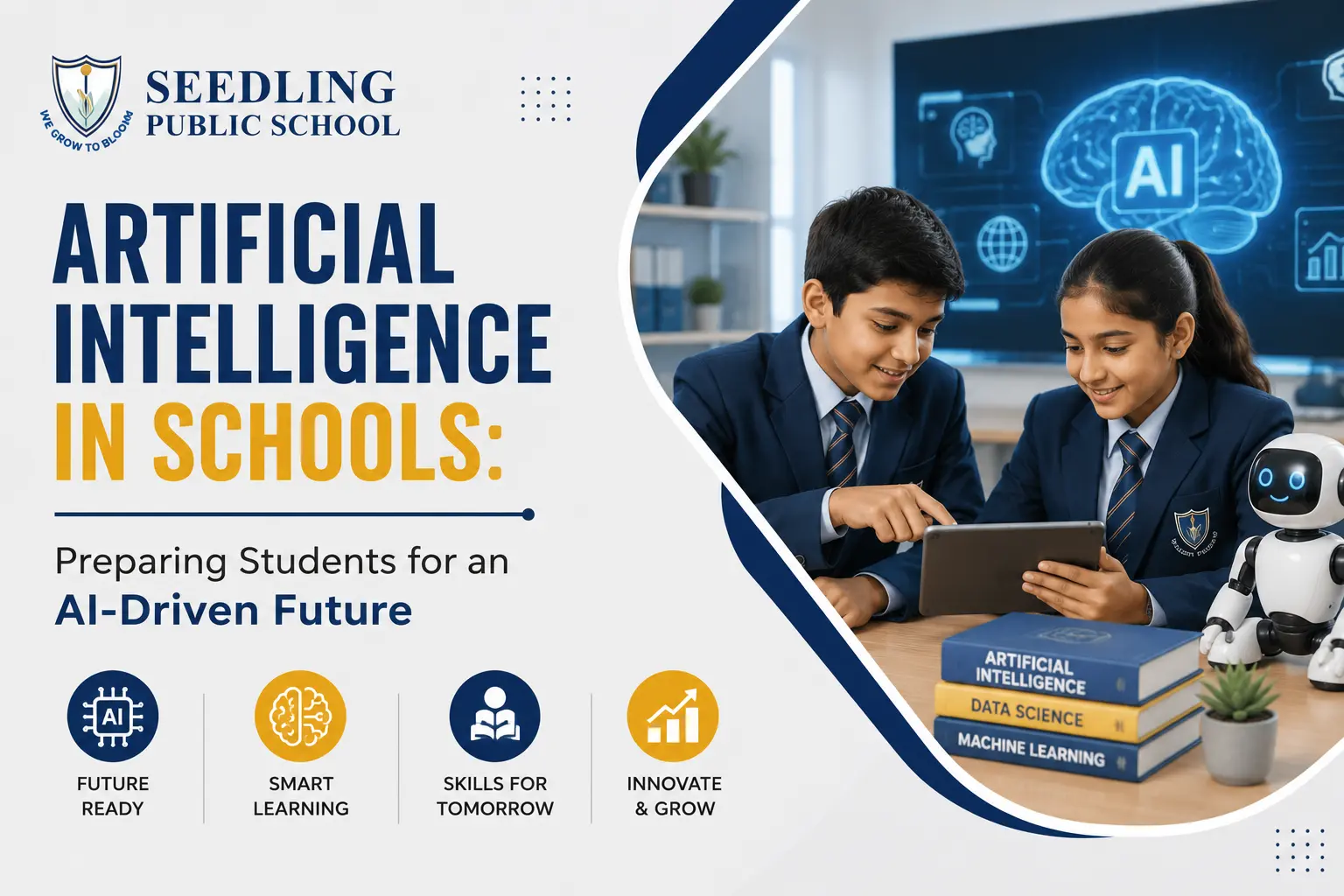
Artificial Intelligence (AI) is no longer a futuristic concept; it is already transforming how people learn, work, communicate, and solve problems. From personalised learning platforms to AI-powered assistants, students are interacting with AI technologies both inside and outside the classroom. Recognising this shift, UNESCO emphasises that education should prepare learners not only to use AI but also to understand, evaluate, and apply it responsibly and ethically.
As AI becomes part of everyday life, schools have an important responsibility to help students develop the knowledge, skills, and values needed to thrive in an increasingly AI-driven world.
In This Article
Why AI Education Matters Today
Artificial Intelligence is becoming an essential skill across industries, making AI literacy increasingly important for students. The World Economic Forum’s Future of Jobs Report 2025 identifies AI and big data, technological literacy, creative thinking, and analytical thinking among the fastest-growing workplace skills, highlighting the need for students to become confident users of emerging technologies.
In India, this aligns with the National Education Policy (NEP) 2020, which promotes technology-enabled learning, digital literacy, critical thinking, creativity, and problem-solving. Complementing this vision, CBSE has introduced Computational Thinking (CT) and Artificial Intelligence (AI) into school education to help students build future-ready competencies.
Admissions Open
Give Your Child the Best Start
Join Seedling Public School and unlock a world-class learning environment built for tomorrow's leaders.
Apply for Admission →Through its AI curriculum and skill education initiatives, CBSE encourages schools to build awareness of artificial intelligence alongside computational thinking and responsible technology use.
Understanding why AI matters is only the beginning. The next step is exploring how it is already improving classroom learning.
How AI Is Transforming Classroom Learning
Artificial Intelligence is helping schools create more personalised, inclusive, and engaging learning experiences. Rather than replacing teachers, AI supports classroom instruction by helping educators identify learning gaps, adapt teaching strategies, and provide timely feedback.
AI in Action: A Classroom Example
Imagine a Grade 6 mathematics class where students are learning fractions. An AI-powered learning platform identifies which students need additional practice and automatically suggests personalised exercises. While students work at their pace, the teacher reviews the learning dashboard, addresses common misconceptions, and provides one-to-one support where required. This combination of AI insights and teacher guidance creates a more personalised and effective learning experience.
Some practical classroom applications include:
- Personalised learning pathways
- Instant feedback on quizzes and assignments
- AI-assisted language learning, translation, and personalised practice
- Educational chatbots for doubt resolution
- Learning analytics to monitor student progress
- Accessibility tools such as speech-to-text and text-to-speech
According to UNESCO, AI should enhance teaching while keeping teachers central to the learning process.
Using AI effectively also requires students to understand how these systems work and where their limitations lie.
Beyond Technology: Teaching AI Literacy
Preparing students for an AI-driven future involves much more than introducing new technology. Schools must help learners understand that AI-generated responses can sometimes be inaccurate, incomplete, or biased, making critical evaluation an essential skill.
AI literacy includes:
- Critical thinking and fact-checking
- Responsible use of AI tools
- Digital citizenship
- Data privacy and cybersecurity awareness
- Ethical decision-making
- Recognising AI bias and misinformation
According to UNESCO’s Guidance for Generative AI in Education and Research, AI education should adopt a human-centred and ethical approach that protects learners’ rights while encouraging responsible innovation.
These skills support responsible technology use and prepare students for the changing world of work.
Preparing Students for Future Careers
Artificial Intelligence is transforming careers across healthcare, finance, engineering, education, manufacturing, media, and many other sectors. While AI is automating repetitive tasks, employers increasingly value skills that technology cannot easily replace.
Beyond technical knowledge, employers increasingly search for individuals who can collaborate with AI, solve complex problems, communicate effectively, and make ethical decisions in rapidly changing workplaces.
Schools, therefore, play an important role in helping students develop:
- Creativity
- Communication
- Collaboration
- Problem-solving
- Adaptability
- Emotional intelligence
- Ethical reasoning
The OECD Digital Education Outlook 2023 highlights that successful AI integration should strengthen these human-centred competencies rather than replace them.
Alongside career readiness, schools also need to set clear expectations for responsible AI use.
Building a Responsible and AI-Ready Classroom
Preparing students for an AI-driven future requires more than introducing new technology into classrooms. An AI-ready school creates an environment where students learn with AI, about AI, and beyond AI, while continuing to develop independent thinking, creativity, collaboration, and ethical decision-making under the guidance of their teachers.
Schools can build a responsible and AI-ready learning environment by:
- Integrating age-appropriate AI concepts across different subjects
- Teaching students to use AI as a learning assistant rather than a shortcut
- Encouraging learners to verify AI-generated information using reliable sources
- Promoting discussions on ethics, privacy, digital citizenship, and responsible AI use
- Protecting students’ personal data and encouraging safe online practices
- Combining AI-enabled learning with project-based activities, teamwork, and hands-on experiences
- Encouraging students to acknowledge AI assistance where appropriate and maintain academic integrity
According to UNESCO’s Guidance for Generative AI in Education and Research, AI should be integrated into education in ways that enhance teaching and learning while ensuring that educators remain central to the learning process. Similarly, UNICEF’s Policy Guidance on AI for Children highlights that AI systems used by children should prioritise safety, transparency, inclusion, privacy, and children’s best interests.
Ultimately, an AI-ready classroom is not defined by the amount of technology it uses but by how effectively it helps students become responsible digital citizens, critical thinkers, and confident lifelong learners who can use AI thoughtfully and ethically.
Conclusion
Artificial Intelligence is transforming education, but preparing students for the future requires much more than introducing new technology into classrooms. Schools need to help learners develop critical thinking, creativity, ethical decision-making, digital responsibility, and the confidence to use AI thoughtfully alongside human judgment.
At Seedling Public School, this future-ready approach is reflected through technology-enabled learning, inquiry-based teaching, and activities that encourage students to think independently, solve real-world problems, and become responsible digital citizens. By combining strong academic foundations with emerging technologies, the school prepares students not only for an AI-driven future but also for lifelong learning in a rapidly evolving world.
Frequently Asked Questions
1. At what age should students start learning about AI?
Students can begin with age-appropriate AI awareness and computational thinking in the primary years.
2. Will AI replace teachers in schools?
No. AI is designed to support teaching, while teachers continue to guide learning, critical thinking, and student development.
3. Is coding necessary to understand AI?
No. AI literacy also includes ethics, responsible use, and understanding how AI systems work.
4. Can AI help students with every subject?
AI can support learning across many subjects, but students should use it to enhance understanding rather than replace independent thinking and classroom learning.
5. Why is AI literacy important for school students?
It helps students use technology responsibly, think critically, and prepare for future academic and career opportunities.
6. How can schools ensure students use AI responsibly?
Schools can establish clear guidelines on ethical AI use, encourage fact-checking, promote digital citizenship, and help students understand the importance of originality and academic integrity.
7. Can students rely on AI tools for homework?
AI can support research and learning, but students should use it to enhance their understanding rather than submit AI-generated work without critical thinking or proper guidance.
Ready to Enrol?
Begin Your Admission Journey
Seats are limited. Secure your child's place at Seedling Public School today.
Enquire Now →Written by
SPS Editorial Team
SPS Editorial Team creates trusted educational content for Seedling Public School (SPS). Our articles are developed with insights from experienced educators and academic professionals, ensuring every piece is accurate, practical, and relevant. We are committed to providing reliable resources that support students, parents, and lifelong learning.