The Importance of Sports in School Education: Building Skills Beyond the Classroom
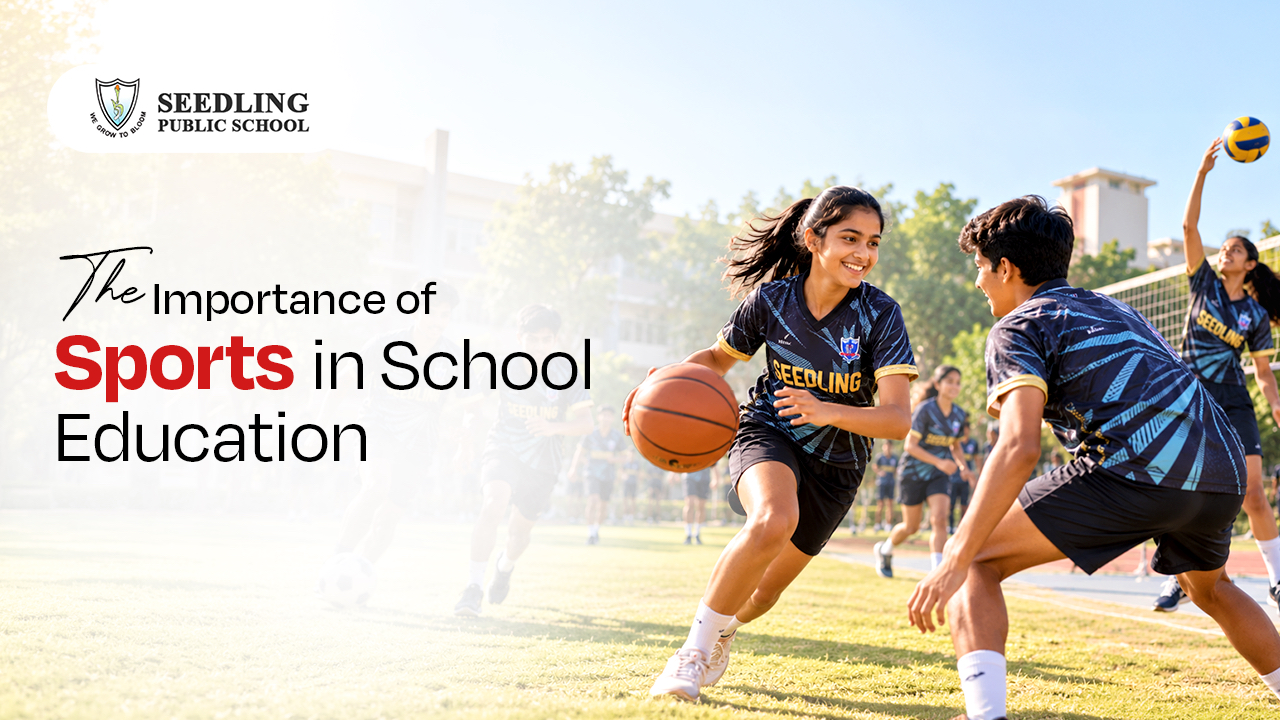
What if a school timetable could teach children something a textbook cannot? A child misses a goal. A team loses a close match. Someone has to encourage a teammate who wants to give up. Another student keeps practising a difficult skill until it finally clicks. None of these moments appear in an examination paper. Yet they teach children how to respond to challenges, work with others, stay disciplined, and keep moving forward.
That is why the importance of sports in school education goes far beyond physical fitness. Sports can become a practical learning environment because children have opportunities to practise skills such as teamwork, decision-making, confidence, empathy, and leadership in real situations. UNICEF identifies these among the life skills that can be developed through sport-based learning.
For parents looking for top school in Jaipur, sports can therefore be an important part of evaluating the overall educational experience, not simply an additional activity after academics.
In This Article
Why Are Sports Important in School Education?
- Physical and practical learning: Sports combine physical activity with practical learning, helping students develop discipline, communication, confidence, resilience, decision-making, and leadership.
- Learning through participation: A good school sports programme gives children opportunities to participate, discover their interests, and understand the value of consistent effort.
- Handling success and setbacks: Training and competition help students learn how to respond to both achievements and disappointments.
- Holistic development at Seedling Public School: Sports are given importance alongside academics, arts, creativity, and other co-curricular activities as part of the school’s approach to holistic development.
How Sports Become Another Classroom for Students
Think about what happens during a typical game. A player has only a few seconds to make a decision. Teammates need to communicate. Rules have to be followed. Mistakes have consequences. Sometimes the team wins, and sometimes it does not.
Admissions Open
Give Your Child the Best Start
Join Seedling Public School and unlock a world-class learning environment built for tomorrow's leaders.
Apply for Admission →This creates learning experiences that are difficult to reproduce through a conventional lesson.
When Students Lose, They Learn to Respond
Losing a match can be disappointing, particularly for children who have worked hard to prepare for it.
But a loss can also encourage students to reflect:
- What went wrong?
- What could we practise differently?
- How can we support the team?
- What should we try next time?
This is where sports can teach resilience. Students gradually learn that one unsuccessful performance does not define their ability.
The same mindset can help them approach a difficult mathematics problem, a challenging presentation, or any other situation where the first attempt does not work.
How Sports Support Physical Development
Physical development is one of the most direct benefits of regular sports participation. Running, jumping, swimming, and other active movements help children build strength, stamina, coordination, and overall physical fitness.
Here are some ways regular sports can support growing children:
- Stronger muscles and bones: Activities involving running, jumping and movement help develop physical strength.
- Better stamina: Sports such as athletics, swimming and team games encourage children to stay active and build endurance.
- Improved coordination: Throwing, catching, balancing and changing direction help children develop motor skills and body coordination.
- Healthy activity habits: Regular participation in sports can help children become more comfortable with movement and make physical activity a natural part of their routine.
Physical development is only one part of the picture. In school, sports can also give children opportunities to build discipline, confidence, teamwork, and resilience while staying active.
At Seedling Public School, sports are included alongside academics and other co-curricular activities as part of its broader approach to student development.
How Sports Build Discipline and Consistency
Most sporting improvement is not dramatic. It happens through repetition. A student attends practice, works on technique, makes mistakes, receives guidance, and tries again. Over time, these small efforts can become visible improvement.
This teaches an important connection:
Practice → consistency → progress
Sports can therefore help students understand why discipline matters. The lesson is not simply about following a coach’s instructions. It is about recognising that meaningful improvement often requires patience and regular effort.
How Sports Develop Teamwork and Communication
A classroom group project can teach collaboration, but a sports team creates an entirely different kind of shared responsibility. A player cannot succeed alone when the game depends on coordinated movement and communication.
Basketball, volleyball and cricket, for example, require students to understand their own role while also paying attention to teammates.
Students learn to:
- Communicate clearly
- Listen to others
- Trust teammates
- Share responsibility
- Respect different strengths
- Make decisions together
Seedling’s sports programme includes basketball, volleyball and cricket, with structured training and competitive opportunities.
These experiences can become valuable preparation for situations students encounter later in higher education, workplaces and community life.
How Sports Build Confidence
Confidence does not always arrive with a trophy. Sometimes it is simply the confidence to participate. A child who was nervous about entering a race may eventually volunteer. A student who struggled with a swimming technique may finally complete it. Another may become comfortable communicating with teammates.These small achievements matter. A thoughtful school sports programme should therefore give students opportunities to experience progress at different levels rather than making medals the only measure of success.
Seedling’s sports approach includes opportunities for students across different skill levels, supported by dedicated coaching and structured sporting activities.
How Sports Develop Leadership
Leadership on a sports field is not limited to being the team captain.
It can look like:
- Encouraging a teammate after a mistake
- Taking responsibility for a task
- Helping a younger student
- Staying calm during a difficult match
- Listening before making a decision
- Supporting the team even when not playing
These small actions help children understand that leadership is closely connected with responsibility and consideration for others.
Seedling Public School’s educational approach also places emphasis on leadership, values, confidence, and preparing students to meet future challenges.
What Should Parents Look for in a School Sports Programme?
For parents comparing schools, the question should not simply be, “Does the school have sports?” A better question is: “What kind of sporting experience will my child receive?”
Here are a few things worth considering.
Variety of Activities
Children have different interests. Some enjoy team games, while others prefer individual activities. A broader selection can help students discover an activity they genuinely enjoy.
For example, Seedling’s current sports programme features basketball, volleyball, cricket and swimming, along with athletics and other sporting opportunities.
Quality Coaching
Good coaching is about more than improving technique. Coaches also influence how children understand discipline, teamwork, competition and sportsmanship.
Parents can look for schools that provide qualified coaches and structured training rather than relying only on informal practice sessions.
Opportunities to Participate and Compete
Competition can teach children how to prepare, perform under pressure, and respond to outcomes.
Look for opportunities such as inter-school leagues, tournaments and other competitive events that allow students to apply their skills beyond regular practice.
Suitable Sports Facilities
Facilities can influence how regularly and effectively students practise.
When comparing schools, check whether they offer appropriate spaces and equipment for the sports they promote, such as multi-sport grounds, athletic tracks, courts, practice nets or swimming facilities.
Why Sports Matter When Choosing a Public School in Jawahar Nagar Jaipur
When parents search for a public school in Jawahar Nagar Jaipur, academics, curriculum, faculty, and infrastructure naturally receive attention. Sports deserve a place in that conversation too. A school sports programme can tell parents a great deal about how a school views student development. Does it encourage participation? Does it provide coaching? Are there opportunities to compete? Are students encouraged to develop skills beyond the classroom?
Seedling Public School, located in Sector 4, Park Lane, Jawahar Nagar, Jaipur, combines its CBSE academic programme with sports and a range of extracurricular opportunities. The school states that sports are given importance alongside academics and that its activities support confidence, teamwork, responsibility, discipline and leadership.
For families considering a school in the area, this broader approach can be an important part of the decision.
Why Sports in School Are About More Than Winning
The final score tells you who won a game. It does not tell you everything a child learned while playing it.
A student may learn to keep practising after failing. Another may discover how to communicate with people who think differently. Someone else may become confident enough to take responsibility.
These outcomes may not appear on a report card, but they can shape how children approach challenges. That is what makes sports such a valuable part of school education.
Conclusion
The importance of sports in school education is not limited to fitness or competition. The sports field can become another classroom where students experience discipline, teamwork, resilience, confidence, and leadership through real situations.
For parents searching for a public school in Jawahar Nagar, Jaipur, looking at sports as part of the wider educational experience can provide another perspective on how a school supports all-round development.
The goal is not for every child to become a champion. It is for every child to discover that progress comes from participation, practice, courage and the willingness to try again. Sometimes, the most meaningful victory is not the one written on the scoreboard. It is the child who walks away from the field stronger, more confident, and ready for the next challenge.
Frequently asked questions
1. At what age should children start participating in school sports?
Children can start age-appropriate sports and physical activities from the early school years.
2. Can sports improve students’ academic performance?
Yes. Regular physical activity can support concentration and overall learning.
3. What if my child is not naturally good at sports?
That’s perfectly fine. Sports build confidence, teamwork, and fitness regardless of talent. Focus on effort and enjoyment, let them try different activities, and celebrate progress rather than winning.
4. How can parents encourage children who dislike sports?
Let them try different activities until they find something they enjoy.
5. How much physical activity should school-age children get?
At least 60 minutes of moderate-to-vigorous physical activity per day for children and adolescents aged 5–17
Ready to Enrol?
Begin Your Admission Journey
Seats are limited. Secure your child's place at Seedling Public School today.
Enquire Now →Written by
SPS Editorial Team
SPS Editorial Team creates trusted educational content for Seedling Public School (SPS). Our articles are developed with insights from experienced educators and academic professionals, ensuring every piece is accurate, practical, and relevant. We are committed to providing reliable resources that support students, parents, and lifelong learning.