
AI Literacy for School Students: What Kids Need to Know Today
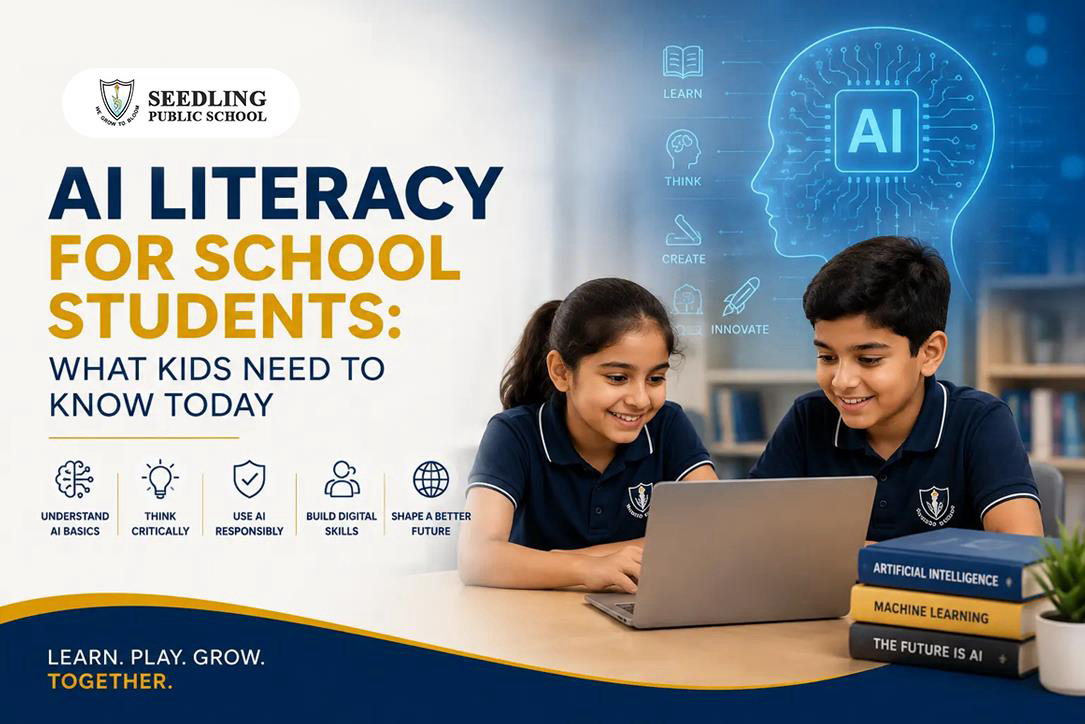
Artificial Intelligence (AI) is no longer a futuristic concept. It is already part of students’ daily lives, from voice assistants and search engines to educational apps and personalised learning platforms. As AI becomes increasingly integrated into education and everyday technology, understanding how it works is becoming as important as traditional digital skills. Developing AI literacy for school students is about helping children use technology thoughtfully, responsibly, and effectively.
However, AI literacy goes beyond learning how to use AI tools. It involves understanding what AI can and cannot do, recognising its limitations, asking thoughtful questions, and using it ethically. Schools and parents both have a role in preparing children for a future where AI will influence careers, communication, creativity, and decision-making across nearly every industry.
Before exploring specific AI skills, it is important to understand why AI literacy has become an essential part of modern education.
In This Article
Why AI Literacy Is Becoming Essential for Every Student
AI is transforming how people learn, work, communicate, and solve problems. According to UNESCO, AI literacy helps learners understand AI technologies, use them responsibly, and make informed decisions while considering ethical and social implications.
Admissions Open
Give Your Child the Best Start
Join Seedling Public School and unlock a world-class learning environment built for tomorrow's leaders.
Apply for Admission →When students understand AI from an early age, they become active users rather than passive consumers of technology. Instead of accepting every AI-generated answer at face value, they learn to question information, verify facts, and think critically.
Five AI Literacy Skills Every School Student Should Develop
According to UNESCO’s AI Competency Framework for Students, AI literacy extends beyond learning how to use technology. It involves developing the knowledge, skills, and attitudes needed to understand AI, evaluate its outputs, use it responsibly, and participate ethically in an AI-enabled world. Building on these principles, here are five essential AI literacy skills every student should develop.
1. Understanding How AI Works
Students should understand the basic idea behind Artificial Intelligence, where it is used in everyday life, and how AI systems generate responses or recommendations. This foundational knowledge helps children become informed users rather than simply interacting with AI without understanding its purpose.
2. Thinking Critically About AI Responses
UNESCO encourages learners to evaluate AI-generated information instead of accepting it automatically. Students should learn to verify facts, compare AI-generated content with reliable sources, and recognise that AI systems can occasionally produce inaccurate or biased responses.
3. Using AI Responsibly and Ethically
Responsible AI use includes respecting academic honesty, acknowledging AI assistance where appropriate, avoiding plagiarism, and understanding how AI decisions may affect individuals and communities.
4. Protecting Privacy and Digital Safety
Students should understand the importance of protecting personal information when interacting with AI tools. Learning safe digital practices helps children become responsible digital citizens.
5. Applying Creativity and Human Judgement
AI can assist with brainstorming, research, and idea generation, but creativity, empathy, collaboration, and independent thinking remain uniquely human strengths. Students should learn to use AI as a support tool while continuing to develop their own ideas and problem-solving abilities.
The goal of AI literacy is not to encourage dependence on AI but to help students understand when to use it, when to question it, and when to rely on their own judgement.
These skills closely align with UNESCO’s vision of preparing learners to use Artificial Intelligence responsibly, ethically, and critically in education and everyday life.
How Schools Can Introduce AI Literacy in Everyday Learning
Schools can integrate AI literacy into existing subjects such as science, languages, computer studies, mathematics, and social science without introducing an entirely new subject.
Teachers can discuss how AI generates responses, encourage students to compare AI-generated information with trusted sources, and design classroom activities that require independent thinking alongside technology use.
Project-based learning, coding activities, discussions about ethical technology use, and collaborative problem-solving all help students understand AI in meaningful ways.
The strategies schools adopt are most effective when they focus on building a balanced set of AI literacy competencies. The table below summarises the key skills every student should gradually develop.
AI Literacy Competencies at a Glance
| Skill | Why It Matters |
| Understanding How AI Works | Helps students recognise how AI works in everyday life |
| Critical thinking | Encourages students to question and verify AI-generated information |
| Responsible use | Promotes ethical learning and academic honesty |
| Digital safety | Protects personal information while using AI tools |
| Creativity & Innovation | Uses AI to enhance ideas instead of replacing original thinking |
| Problem-solving | Combines human reasoning with AI assistance to find better solutions |
Understanding these competencies is only the first step. The real impact comes when students apply them through meaningful classroom activities and everyday learning experiences.
AI Literacy in Everyday Classroom Learning
AI literacy does not require schools to introduce a separate subject. Instead, it can be woven into everyday classroom activities that encourage students to think critically and use technology responsibly. The focus should be on helping children understand AI as a learning tool rather than a source of ready-made answers.
For example, teachers can ask students to compare an AI-generated explanation with information from their textbook and discuss any differences they notice. Language classes can encourage students to review AI-generated stories and identify areas where creativity, accuracy, or human expression can be improved.
Classroom discussions can also introduce age-appropriate conversations about AI bias by exploring how different prompts may produce different responses and why it is important to question information instead of accepting it without verification.
Students can also use AI for brainstorming ideas before developing their own original solutions. Whether writing an essay, designing a poster, or working on a science project, AI can support the creative process, but students should be encouraged to build on those ideas using their knowledge, imagination, and critical thinking.
How Parents Can Support AI Learning
Parents play an equally important role in helping children develop healthy AI habits.
Simple conversations about how AI works, discussing when to trust online information, encouraging curiosity, and setting guidelines for responsible technology use help children become confident digital learners.
Rather than discouraging AI, parents can teach children when and how to use it appropriately.
As Artificial Intelligence becomes an increasingly important part of education and everyday life, helping children use it wisely is becoming just as essential as teaching traditional academic skills.
Preparing Students for an AI-Driven Future
Building AI literacy for school students is not about turning every child into a programmer. It is about helping them understand how AI works, recognise its strengths and limitations, think critically, protect their privacy, and use technology responsibly. These skills will help students become informed learners and responsible digital citizens.
As AI continues to become part of education and everyday life, schools and families have an important role in helping children use it responsibly. By encouraging curiosity, ethical decision-making, and critical thinking, they can prepare students for a future where AI literacy, digital literacy, and responsible technology use are essential life skills.
FAQs
1. At what age should children start learning about AI?
Children can begin learning basic AI concepts in primary school using age-appropriate examples and activities.
2. Does AI literacy mean learning programming?
No. AI literacy focuses on understanding, evaluating, and using AI responsibly. Programming is only one possible extension.
3. Can AI improve classroom learning?
Yes. When used appropriately, AI can support personalized learning, creativity, and problem-solving.
4. Why should students verify AI-generated information?
AI tools can sometimes provide inaccurate or incomplete information, making fact-checking an essential skill.
5. Can AI replace teachers?
No. AI can support learning, but teachers remain essential for guidance, feedback, emotional support, and developing critical thinking and social skills.
This inquiry is a high-value, SEO-friendly question that complements the blog without repeating earlier content.
Relevant References
- UNESCO – Guidance for Generative AI in Education and Research: https://www.unesco.org/en/articles/guidance-generative-ai-education-and-research
- UNICEF – Policy Guidance on AI for Children: https://www.unicef.org/globalinsight/reports/policy-guidance-ai-children
Ready to Enrol?
Begin Your Admission Journey
Seats are limited. Secure your child's place at Seedling Public School today.
Enquire Now →Written by
SPS Editorial Team
SPS Editorial Team creates trusted educational content for Seedling Public School (SPS). Our articles are developed with insights from experienced educators and academic professionals, ensuring every piece is accurate, practical, and relevant. We are committed to providing reliable resources that support students, parents, and lifelong learning.